
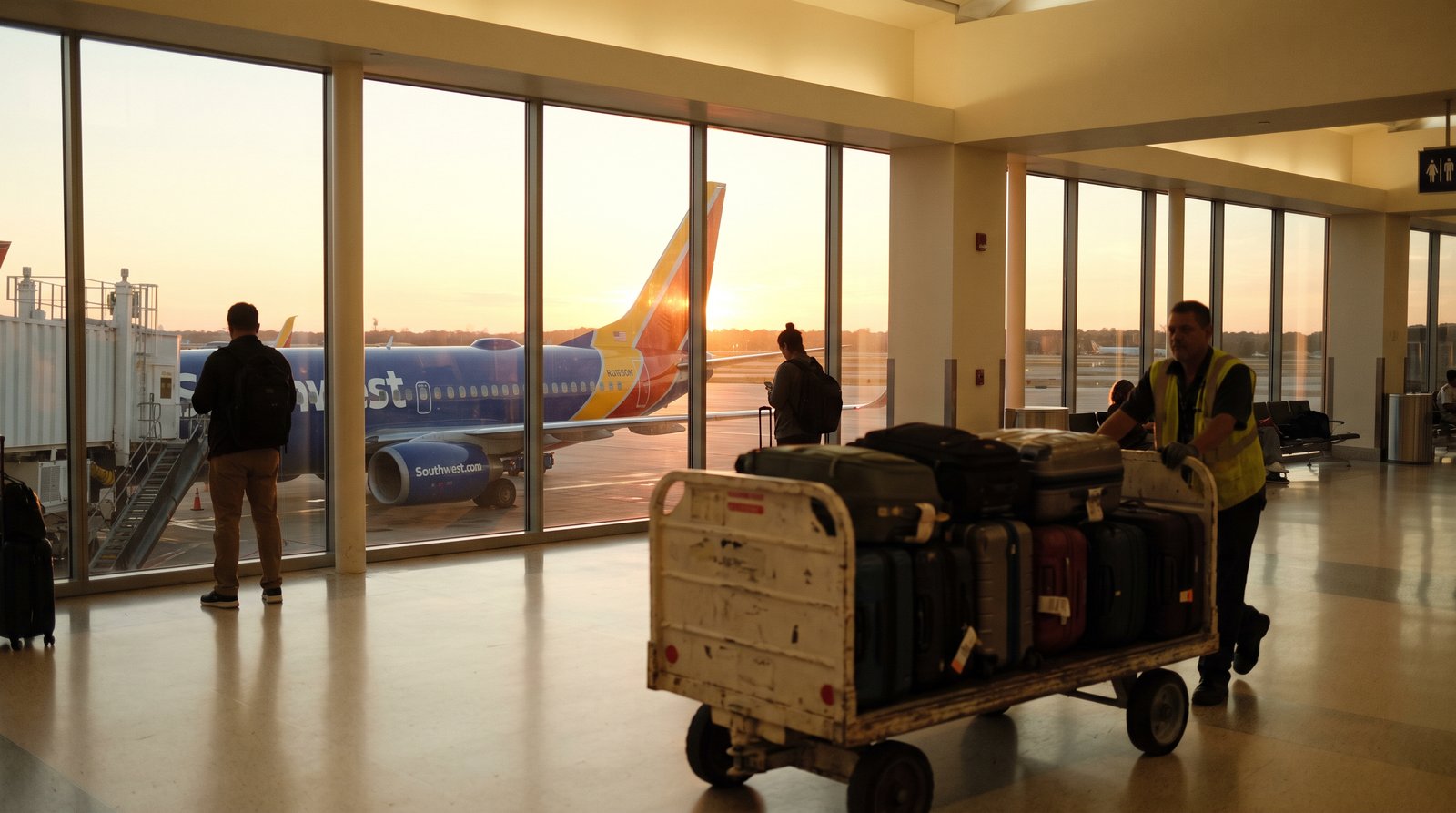
For 54 years, Southwest Airlines built its entire brand around a single promise: your first two checked bags fly free. It was the punchline of every commercial, the tagline on cocktail napkins, the number one reason regular travelers picked the yellow-and-red plane over the pricier competition. It was, according to Southwest’s own marketing team, “the last true perk in American aviation.”
That promise ended on May 28, 2025. The airline began charging $35 for a first checked bag and $45 for a second, with a handful of loyalty carve-outs. The customer response was overwhelmingly negative, but the industry response was quieter and more consequential: Southwest had removed the last competitive floor on baggage pricing in the United States.
Sixteen months later, that reversal has aged in ways worth counting up.
The timeline, on one page
The Southwest story is not one event. It is three, in quick succession.
| Date | What happened |
|---|---|
| March 11, 2025 | Southwest announces the end of “Bags Fly Free.” The policy had been in place since the airline’s founding in 1971. |
| May 28, 2025 | Fees take effect on new bookings: $35 first bag, $45 second. A-List Preferred members and Business Select fares keep two free bags; A-List and credit-card holders keep one. |
| April 9, 2026 | Southwest raises the fees again to $45 first bag, $55 second — a $10 hike less than a year in, publicly attributed to jet fuel spikes tied to Middle East conflict near the Strait of Hormuz. |
| Today | Southwest, United, American, Delta, and Alaska all charge the identical $45 / $55 for the first two checked bags on standard domestic fares. There is no discount airline left. |
The comparison nobody makes at booking
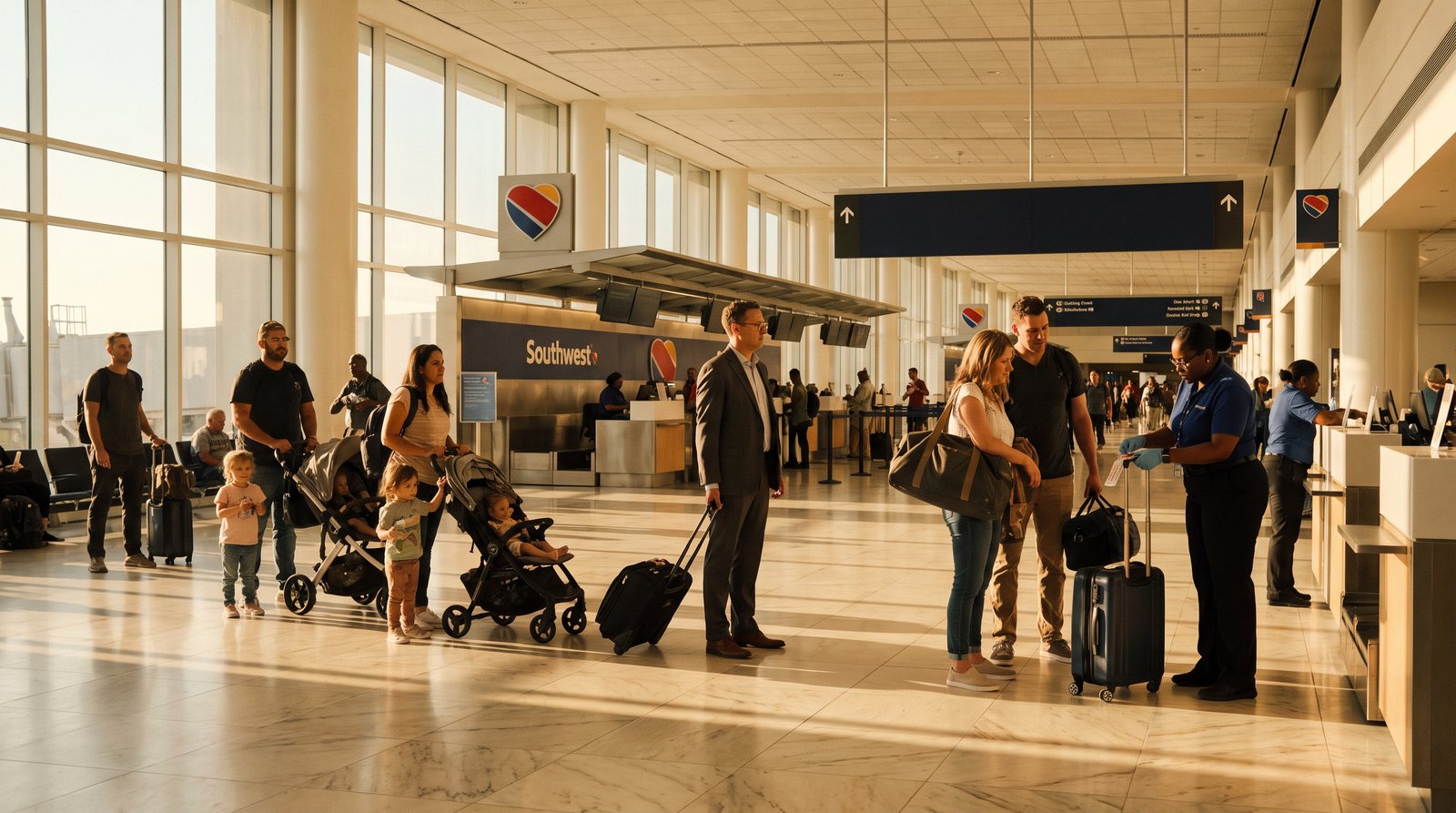
Because baggage fees are collected downstream of the ticket price — at check-in, on the app, or at the counter — most travelers never see them in a comparison-shopping context. Booking sites don’t include them. Fare aggregators don’t include them. The result is a hidden price grid that has, in less than eighteen months, converged into near-perfect alignment.
Here is what the five largest US domestic carriers charge for checked bags in August 2026, published prices, prepaid online, for standard fares without elite status or co-branded credit cards.
| Airline | 1st bag | 2nd bag | 3rd bag |
|---|---|---|---|
| United | $45 | $55 | $200 |
| American | $45 | $55 | $150 |
| Delta | $45 | $55 | $150 |
| Southwest | $45 | $55 | $150 |
| Alaska | $45 | $55 | $150 |
Sources: AP News, USA Today, NerdWallet, and carrier baggage pages. Prices reflect prepaid online rates on standard domestic mainland fares. Airport rates typically add $5. Overweight fees add $100–$200 per bag.
The first bag fee is now the same $45 at every major US carrier. The second bag fee is the same $55. There is no daylight left.
What the alignment actually means
In economics, when identical products from different sellers trend toward identical prices at roughly the same time, one of two things is happening: perfect competition, or perfect coordination. Baggage does not look like perfect competition.
Southwest raised fees on April 9, 2026. American and Delta had raised theirs the week prior. United followed the same week. All five airlines cited the same reason — fuel volatility — and landed at exactly the same number. Consumer-side pressure to hold the line had, effectively, evaporated the moment Southwest quit. That was the point.
The pattern is visible in the numbers. Between 2018 and mid-2025, when Southwest still offered free bags, the average first-bag fee at legacy carriers hovered around $30. In the sixteen months since Southwest exited, that number has risen 50 percent. A family of four checking two bags each round trip on any major US carrier now pays $800 in baggage fees alone. On a ski trip with an oversized ski bag counted as a second bag, the same family pays closer to $1,160.
None of this shows up on a fare comparison page.
Where the savings still live
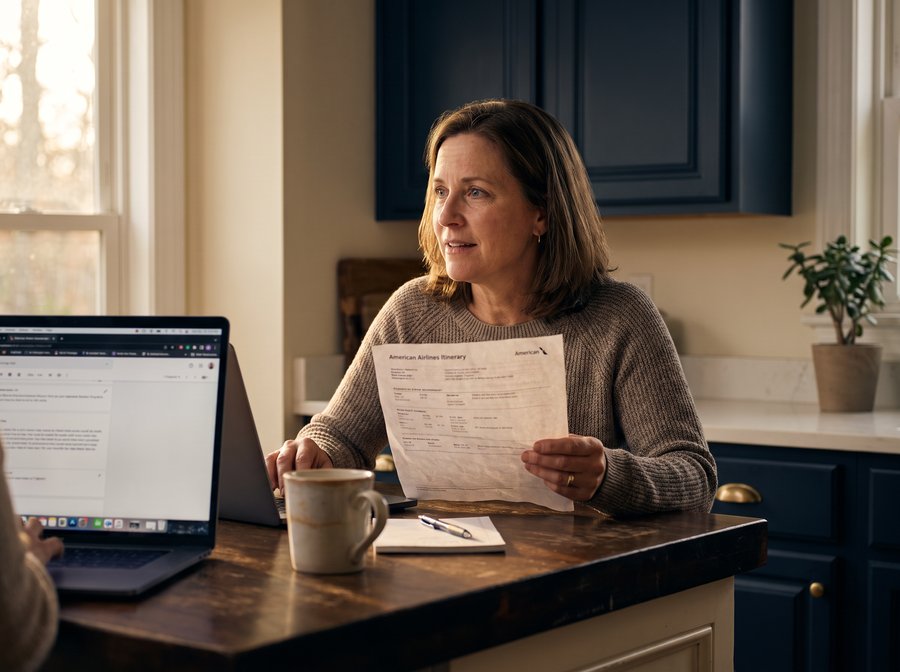
There are still ways to check a bag without paying $45 in 2026. They are worth cataloging because most travelers don’t know all of them.
- Airline credit cards. A cobranded card from your primary carrier — United Explorer, Delta SkyMiles, Southwest Rapid Rewards Priority, AAdvantage — nearly always includes at least one free checked bag for you and companions on the same reservation. Break-even math is usually one round trip per year.
- Elite status. Even entry-tier status at any of the major carriers waives first-bag fees. If you fly a single airline more than four times a year, running the math is worth it.
- Basic Economy exclusions. Delta and United’s cheapest fare buckets don’t include carry-on either. If you’re comparing fares, add $70–$100 round trip to those tickets before you compare.
- Alaska’s guaranteed 20-minute rule. Alaska still guarantees checked-bag delivery within 20 minutes of arrival or you get a discount code — a small but real edge for tight connections.
- Shipping the bag ahead. For sports gear, bulky items, or families moving more than four bags, door-to-door shipping is now consistently under the airline’s per-bag rate. This is the category airlines quietly created when they raised fees past $45.
The category airlines quietly created
The last point deserves its own paragraph. When first-bag fees crossed $40 industry-wide, a set of businesses that had been niche — luggage forwarding services, ski shipping, golf shipping — suddenly became mainstream-priced. A flat $99 per bag door-to-door, with tracking and $500 of coverage included, used to be a premium for people who couldn’t be bothered. In an environment where the airline charges $145 for one overweight ski bag one-way, that same $99 is now the cheaper option, not the fancier one.
Airlines have, in effect, priced themselves out of a service they used to own.
That is the version of the story that isn’t on any airline’s website: not that Southwest ended a beloved policy, but that the whole industry, once Southwest quit, quietly raised the floor to a level where a competing category could exist. That category is here now, and it’s growing every quarter.
The takeaway for 2027 travel planning
If you’re booking travel for late 2026 or 2027, here is the math to run:
- Assume $45 first bag / $55 second bag on any US carrier. Do not assume Southwest is cheaper. It isn’t.
- Multiply by your traveling party size and by two (round trip). A family of four now generates $800 in baggage fees per trip as a baseline.
- If any bag exceeds 50 pounds or is a sports item, add $100–$200 per direction per bag.
- Compare that number to the flat rate at a door-to-door shipping service. For most family trips and virtually all sports travel, the shipping route is now cheaper.
- Whichever way you go, book the bag transport before you book anything else. It is the largest hidden line item in modern air travel.
Southwest didn’t just retire a policy in May 2025. They retired the last competitive check on how much American airlines could charge to move a suitcase. The market has adjusted accordingly.
For families who used to pick Southwest specifically to save on bags: the game changed. The good news is that it changed in a direction that has real alternatives now, ones that used to sound exotic and now sound practical.